WORKSHOP SERIES
Biodiversity-Integrated Metrics for Coastal Risk & Resilience
Introducing four workshops that bring together corporate leaders, insurance executives, risk professionals, and conservation stakeholders to explore the role of biodiversity in assessing nature-related risks and enhancing resilience strategies near coastal ecosystems.
Coming up next…
During AGU 2025 in New Orleans, we are hosting two small, invite-only dinners to “break bread” and dig into how biodiversity and nature data can actually be used in real-world decisions.
These conversations build on a series of recent workshops with finance, conservation, and policy stakeholders. Over dinner, we will share a few distilled insights from those sessions and focus on listening to participants’ experiences and needs. Learn more about those workshops below and on our resources page.

Biodiversity and Risk Dinners at AGU 2025
New Orleans, December 16 and 17, 2025

Natural Resource Management
Victoria, October 9 - 10, 2025
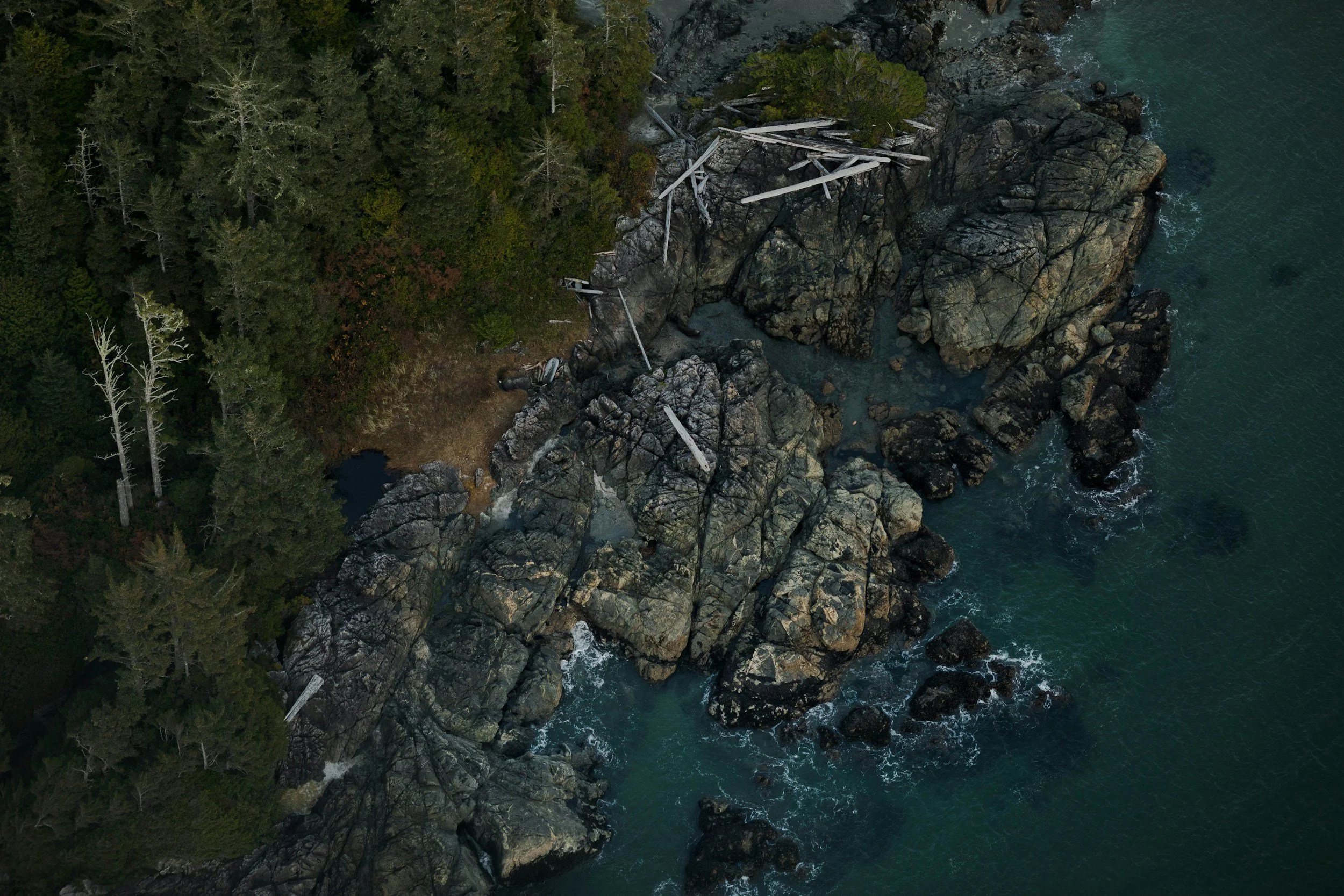
Coastal Buffer
Zones
Santa Cruz, October 26 - 27, 2025
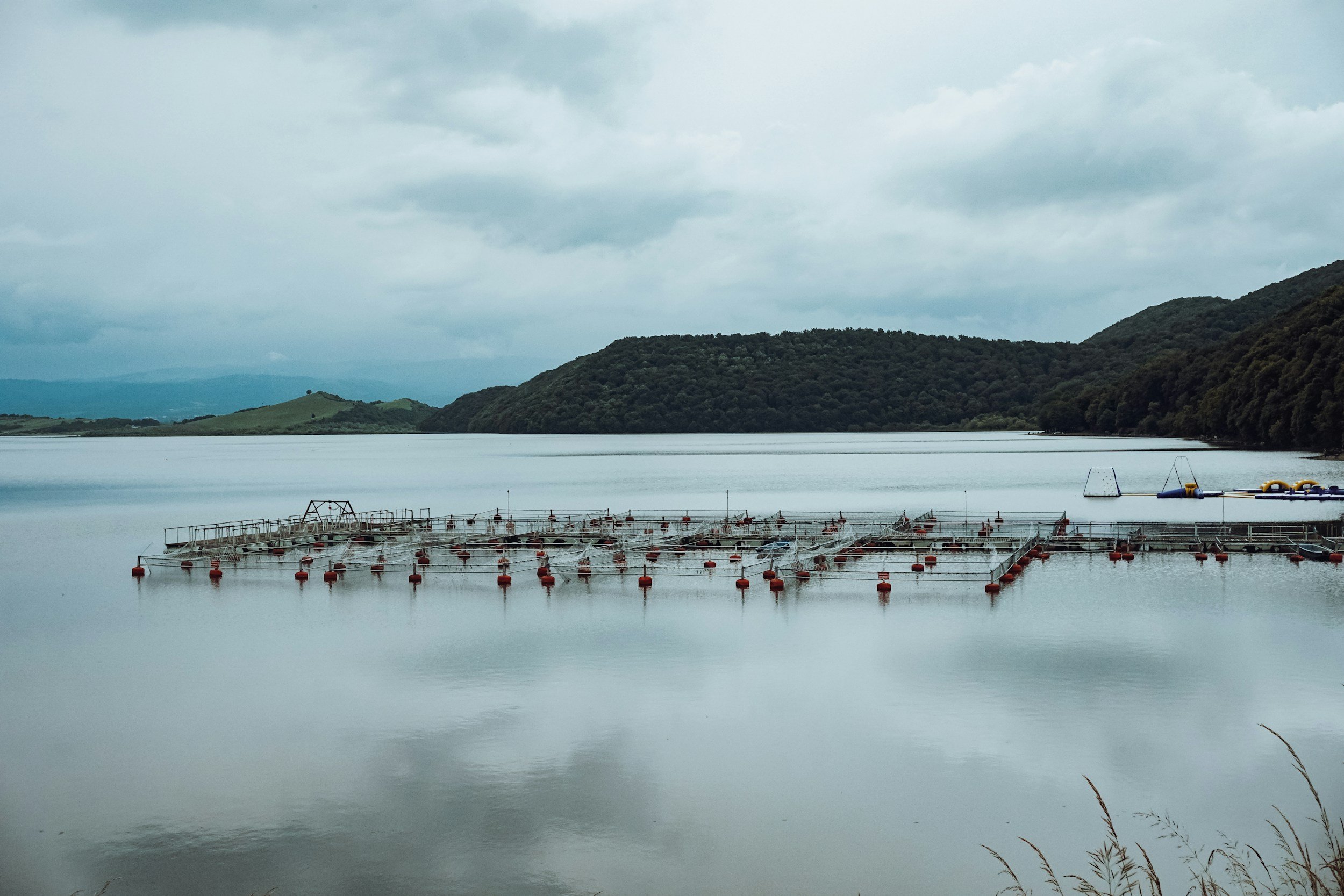
Fisheries, Aquaculture, & Agriculture
Vancouver, November 17 - 18, 2025
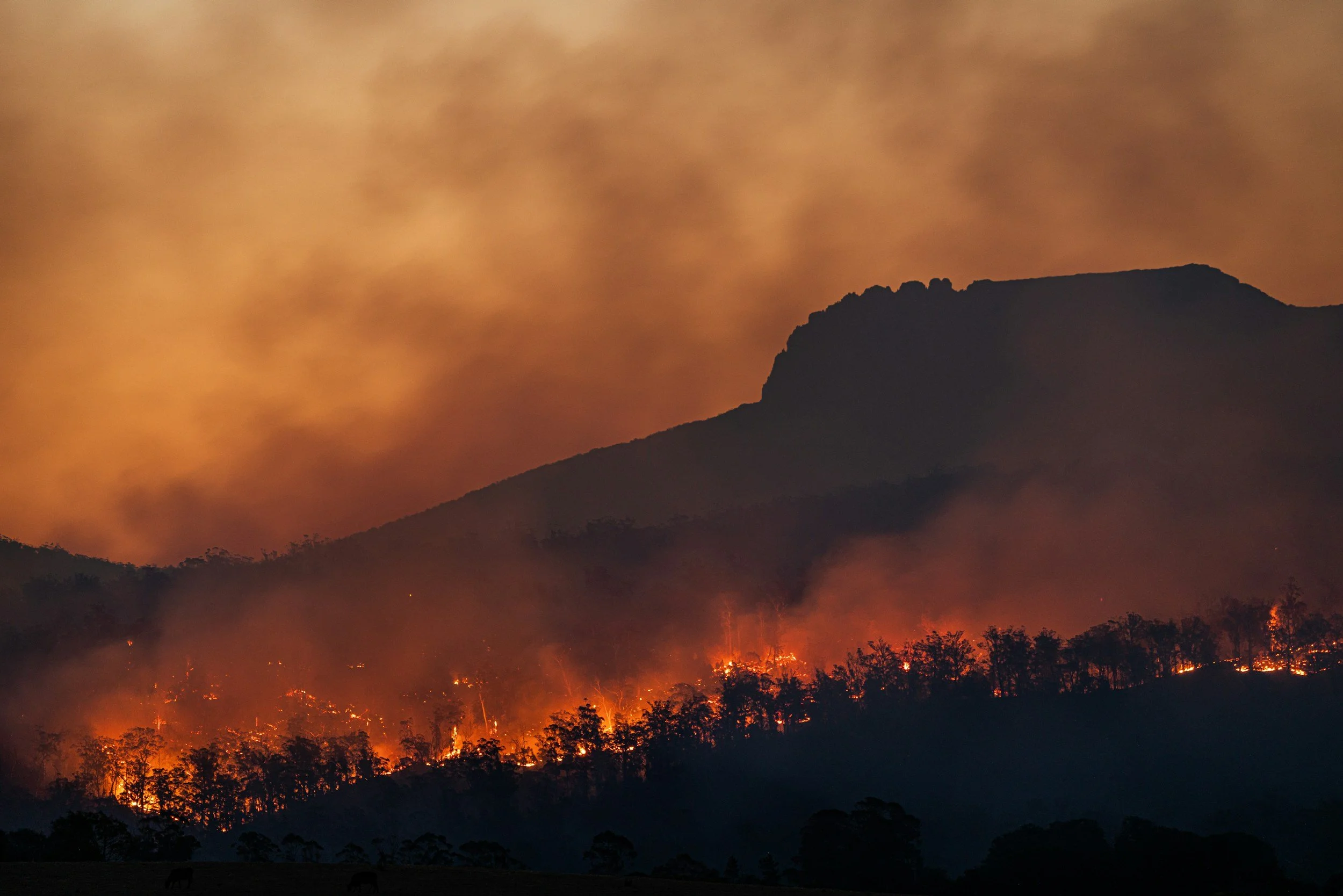
Wildfires &
Forestry
New York, December 4, 2025
About the workshops
This fall, eDNA Explorer is convening four in-person expert workshops focused on nature-based metrics for coastal risk and resilience. Each 1.5-day session will bring together leaders from policy, industry, and science to explore how biodiversity data, including environmental DNA (eDNA), can inform risk assessment, insurance, regulatory compliance, and resilience planning for coastal systems.
Hosted in collaboration with iTrackDNA, the UCSC Center for Coastal Climate Resilience (CCCR), and the NatureTech Collective, and supported by Genome BC and CCCR, these workshops will create space for knowledge exchange, collaboration, and actionable solutions. Participants will engage in interactive discussions, case studies, and risk assessments to better connect cutting-edge biodiversity science with real-world decision-making.
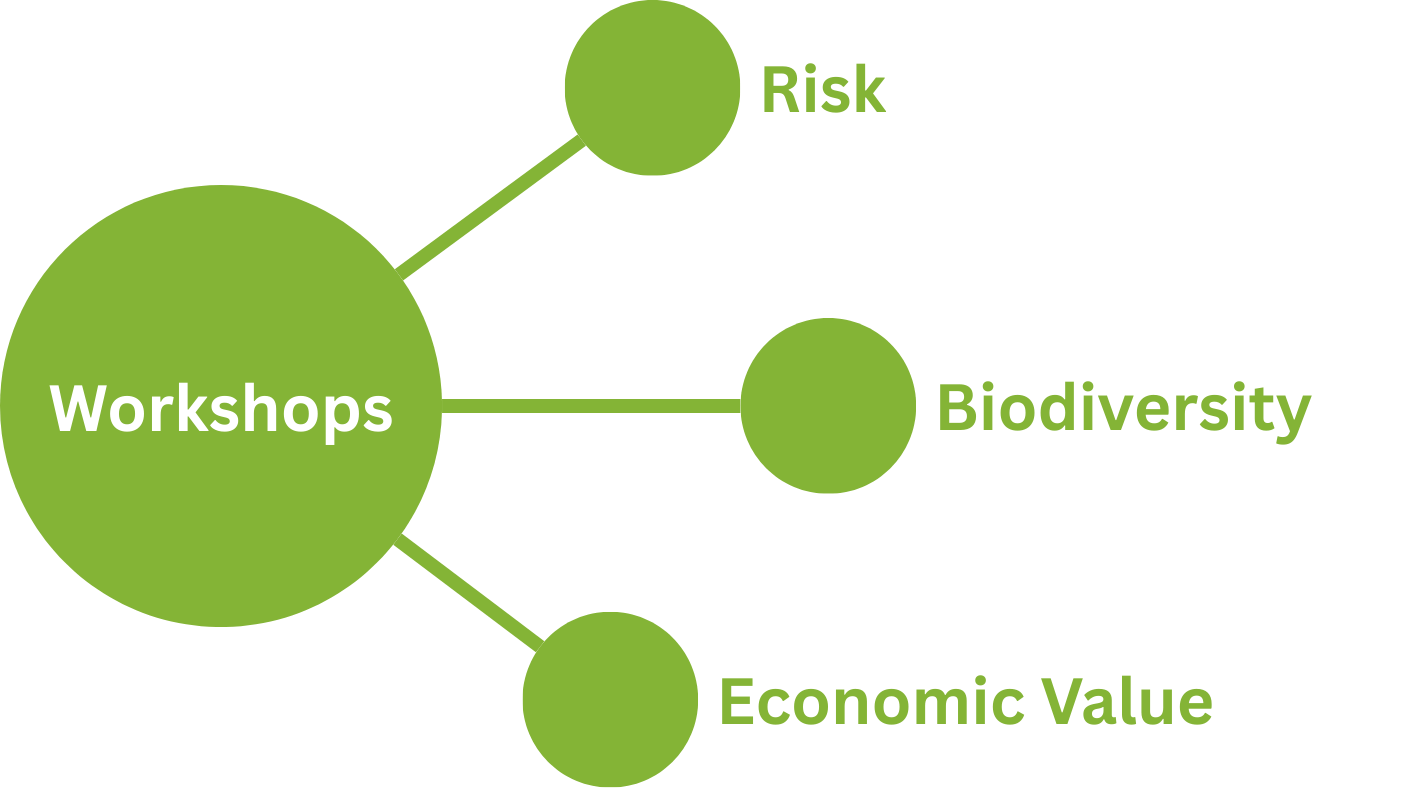
Connect Risk + Biodiversity + Economic Value


Current State of Affairs
Biodiversity is still largely missing from risk analysis and planning, creating gaps that limit impact and investment.
Limited integration of biodiversity data into risk assessment, project prioritization and funding
Funding disconnect: Limited case studies for why to invest in biodiversity and what the benefit might be
To realize the benefit of Nature-Based Solutions, biodiversity must be considered – for example, planting mangroves in a cold climate will just result in their death
Biodiversity considerations are typically ignored in the quest for rapid returns. In fact, biodiversity consideration may lead to lower costs, lower risk and higher profits
Workshop Objectives
Connect biodiversity science with risk modeling to expand financing for restoration.
Explore a decision-making framework that uses biodiversity as a core component for project siting, financial planning, and quantifying a return on investment
Demonstrate the economic value of biodiversity data to unlock new sources of investment and financing for natural resource management
Communicate how and why to integrate biodiversity data into the entire lifecycle of restoration and development projects, from initial risk assessment to measuring outcomes
Show how nature-positive restoration benefits people, ecosystems and the financial bottom line, making it a more compelling strategy

Outcomes
For Individual Participants
Educational materials: Curated guides, references, and tools to take home
Personal data insights: Opportunities to analyze and interpret your own data
Practical workflows: Exposure to risk assessment and resilience planning methods
Skills growth: Training in biodiversity and eDNA applications for risk modeling
Networking: Relationships with peers, mentors, and cross-sector experts
For the Collective Workshop
Shared case studies: Real-world examples across ecosystems and industries
Knowledge exchange: A space for sharing best practices and lessons learned
Community building: Stronger networks across industry, policy, and research
Sector impact: Actionable strategies that integrate biodiversity into risk and resilience planning
Sustained resources: Workshop materials, analyses, and case studies posted for ongoing use

Learn
Discover how biodiversity can inform your risk & resilience planning

Discuss
Engage with experts and peers on challenges and opportunities in biodiversity & risk
Connect
Foster partnerships between biodiversity science, industry, & policy leaders

Apply
Translate new insights into practical strategies for decision-making

About the Workshop
Workshop Logistics*
Format: 1.5-day, in-person workshops
Participants: ~18 per workshop for focused collaboration
Timing: October–December 2025
Accommodation & meals: Provided for participants (1 night covered)
*NYC workshop will follow a different schedule, see NYC workshop webpage for details.
General Program Details & FAQs
-
The workshops* run over 1.5 days and combine networking, expert talks, and hands-on collaboration. Day 1 begins in the afternoon with participant check-in, opening remarks, a keynote, and panel discussions, followed by introductions and an evening dinner with time for informal networking. Day 2 is a full working day, starting with breakfast and continuing with interactive sessions on biodiversity data and eDNA, training modules, and case study presentations. The program closes with strategy discussions, final presentations, and concrete next steps to carry the work forward.
*Note the NYC Wildfire and Forestry workshop will cover similar topics in a condensed schedule. See webpage for details.
-
Each participant is asked to prepare a single slide introducing themselves, why they are attending, and what they hope to gain from the workshop. We also encourage you to reflect in advance on a few guiding questions to help spark discussion:
What do you want to see in this field moving forward?
How can this group collectively help move things in that direction?
What tools, data, or resources do you need to succeed?
What is missing right now — where are the gaps?
This will help us identify shared priorities and opportunities for collaboration.
-
Each workshop will have a hotel booked close to the venue, and one night’s stay will be covered for participants. Once you arrive, transportation between the hotel and the workshop venue will be arranged if required, as well as to any group activities.
Once you arrive, meals and refreshments will be provided:
Day 1 (late afternoon start): Light snacks and dinner
Day 2: Breakfast and lunch
Both days: Coffee and tea will be available throughout
Please let us know in advance if you have any dietary restrictions so we can accommodate your needs.
-
Participants are responsible for arranging their own travel to the workshop city. Once you arrive, transportation will be arranged as needed between the hotel and the workshop venue, as well as to any scheduled group activities (such as the workshop dinner). Whenever possible, the hotel will be within walking distance of the venue, but transport will still be available if required.
-
Yes! The workshops are designed with both learning and balance in mind. After the group dinner that evening, you are welcome to continue socializing or take the evening to yourself. On Day 2, the workshop concludes around 3:00 pm to allow for ease of travel or, if you prefer, extra time to explore the area.
-
We ask that all participants commit to attending the full workshop program and actively engaging in discussions and activities. These workshops are designed to be interactive and participant-driven, so your presence and contributions are essential to their success. Please come prepared to listen, share, and work together toward advancing the field.
Individual Workshop Information

Victoria, October 9 - 10, 2025
Join leaders in natural resource management, insurance, finance, and the NatureTech space to learn how biodiversity data and eDNA can inform risk assessment, resilience planning, and sustainable practices. Collaborate with experts, share insights, and discover actionable strategies, all set against the beautiful backdrop of Victoria, BC. Learn more about the workshop and get workshop specific updates here.

Santa Cruz, October 26 - 27, 2025
Join industry, insurance, and finance leaders, conservation experts, and scientists to explore how eDNA and biodiversity data strengthen resilience and nature-positive restoration efforts in coastal buffer zones to benefit people, ecosystems and the bottom line. Connect with peers, exchange ideas, and build strategies for action, all within the stunning coastal setting of Santa Cruz, California. Learn more about the workshop and get workshop specific updates here.

Vancouver, November 17 - 18, 2025
Join experts across insurance, finance, fisheries, aquaculture, and agriculture to explore how biodiversity data and eDNA can inform sustainable food production and ecosystem management. Discover how innovative tools support risk reduction, productivity, and long-term resilience in working landscapes and seascapes. Collaborate with leaders in industry, policy, and science, and take part in shaping solutions for a sustainable future, all in the vibrant setting of Vancouver, BC. Learn more about the workshop and get workshop specific updates here.

New York, December 4, 2025
Join leaders in forestry, fire management, insurance, and finance to explore how biodiversity data and eDNA can guide wildfire risk reduction and resilient forest management. Learn how science-driven approaches support sustainable practices, restoration, and community safety. Connect with experts, share strategies, and contribute to shaping innovative solutions, all in the dynamic setting of New York City, USA. Learn more about the workshop and get workshop specific updates here.
What is…

eDNA
eDNA (environmental DNA) is genetic material shed by organisms into the environment, allowing scientists to detect species without direct observation. By analyzing DNA from samples like water or soil, it provides a non-invasive way to monitor biodiversity, identify rare species, and track invasive ones.

Biodiversity
Biodiversity is the rich variety of life on Earth, encompassing every living organism and the intricate ecosystems they create. It represents the foundation of healthy planet, supporting essential services from clean air and water to food and medicine.

Nature-related risk
Nature-related risk refers to the potential negative impacts that businesses and financial institutions face due to their dependence and impact on nature. These can include disruptions from biodiversity loss, ecosystem degradation, and changes in natural processes that affect operations and market stability.